

How Boat Builders Choose Stainless Steel and Aluminum Parts Suppliers
Boat builders rarely talk publicly about the process of choosing manufacturing partners for stainless steel and aluminum components, yet those decisions quietly shape the reliability, durability, and long-term reputation of a boat brand. While fiberglass hull laminates and propulsion systems often receive the most attention, the metal hardware that holds everything together—from rod holders and rails to structural brackets and mounting systems—plays an equally critical role in real-world durability. In saltwater environments, even small fabrication flaws can eventually lead to corrosion, fatigue, or premature failure.
For this reason, engineers and production teams typically evaluate stainless steel and aluminum parts suppliers through a lens that goes well beyond simple price comparisons. The decision is usually driven by a combination of materials expertise, fabrication quality, and a manufacturer’s ability to deliver consistent components at production scale.
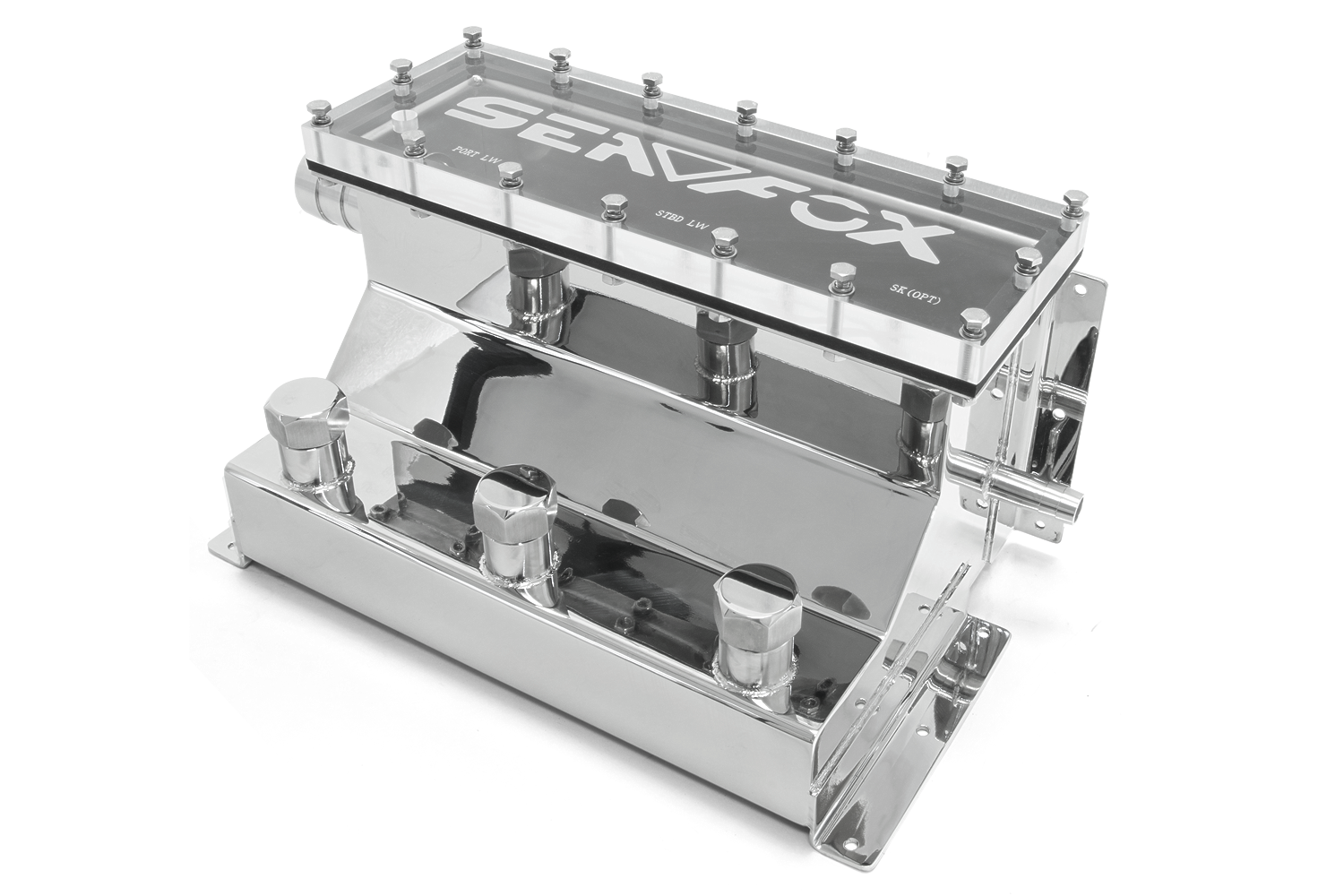
Sea Fox Sea Chest - Quality marine stainless steel and aluminum fabrication for boat manufacturers
The Reality of Marine Operating Conditions
Marine hardware operates in one of the most demanding environments found in consumer products. Boats experience a combination of constant UV exposure, saltwater corrosion, mechanical vibration from engines and trailering, and repeated washdowns throughout their service life. Unlike many manufactured products that operate in controlled conditions, marine hardware must perform reliably across a wide range of environments—from warm coastal waters to colder offshore fisheries. Components mounted on the exterior of the vessel often remain exposed to moisture and salt residue for extended periods of time.
Because of these conditions, boat builders typically specify materials that provide a balance of corrosion resistance, structural strength, and manufacturability. Stainless steel alloys such as 316 stainless steel are widely used for exposed hardware, while aluminum alloys like 5052 and 6061 are commonly selected for structural brackets and machined components.
Examples of these fabricated parts can be seen in the PW Marine OEM custom parts gallery:
https://pwmarineoem.com/custom-parts-gallery
Material Selection Is Only the Starting Point
Although the choice of alloy is important, experienced boat builders know that the performance of a metal component depends just as much on how the material is fabricated and finished. Two parts manufactured from the same alloy can perform very differently depending on the quality of welding, machining tolerances, and finishing processes used during production.
In stainless steel fabrication, weld penetration and post-weld finishing play a significant role in corrosion resistance. Weld areas that are improperly finished can become the first location where corrosion begins to develop. Aluminum fabrication presents its own challenges, particularly when components must be both lightweight and capable of withstanding repeated mechanical loads.
Manufacturers specializing in marine fabrication typically rely on processes such as TIG welding, CNC machining, and controlled finishing methods to ensure long-term durability. The manufacturing processes used to produce these components are outlined in the PW Marine OEM manufacturing capabilities overview:
https://pwmarineoem.com/manufacturing
Materials Commonly Used in Marine Hardware
| Material | Typical Marine Use | Primary Advantage |
|---|---|---|
| 316 Stainless Steel | Rails, rod holders, deck hardware | Excellent corrosion resistance in saltwater |
| 5052 Aluminum | Structural brackets and plates | Strong corrosion resistance and formability |
| 6061 Aluminum | Machined structural components | High strength and machinability |
Consistency Matters as Much as Engineering
While engineers may focus on material specifications and structural performance, production managers often view the supplier decision through a different lens: consistency. Boat assembly lines rely on parts that fit correctly every time. Even small variations in fabrication tolerances can slow installation or require adjustments during assembly. Over the course of a production run, those small inconsistencies can compound into significant inefficiencies.
Reliable suppliers address this challenge through repeatable manufacturing processes and consistent quality control procedures. Dimensional inspection, first-article validation, and repeatable production fixtures all contribute to maintaining the consistency required for modern boat manufacturing.
Examples of long-term manufacturing partnerships can be seen in PW Marine OEM customer case studies:
https://pwmarineoem.com/customer-case-studies
Corrosion Prevention Remains a Primary Concern
Most production boat builders learn quickly that weld quality and corrosion resistance matter more than reducing tube thickness. Poor weld finishing is often where corrosion begins in marine hardware.
Saltwater corrosion remains one of the most persistent challenges in marine hardware design. Even corrosion-resistant materials can deteriorate prematurely when exposed to unfavorable conditions such as trapped moisture, dissimilar metal contact, or improperly finished weld areas.
Galvanic corrosion is another factor engineers must consider when designing assemblies that combine stainless steel and aluminum components. Without proper isolation techniques, electrical potential differences between dissimilar metals can accelerate corrosion in aluminum parts.
Preventing these issues usually requires a combination of thoughtful engineering and appropriate finishing processes. Stainless components may undergo passivation or electropolishing to enhance corrosion resistance, while aluminum parts are often protected through anodizing or specialized marine coatings.
The Importance of Marine Manufacturing Experience
One of the less visible factors in supplier selection is a manufacturer’s familiarity with the marine industry itself. Fabrication shops that primarily serve industrial or architectural markets may be highly capable metal fabricators yet still lack an understanding of how marine hardware behaves in real-world conditions.
Marine environments introduce unique considerations such as constant vibration, long-term salt exposure, and the practical constraints of installation within a boat’s structure. Suppliers with marine manufacturing experience are often better positioned to anticipate these challenges and recommend design adjustments that improve durability and serviceability.
These insights frequently emerge during the early stages of product development, when engineers collaborate with fabrication partners to refine component designs before production begins. Services such as design and pre-production engineering support can play an important role in this process:
https://pwmarineoem.com/design-pre-production
A Long-Term View of Supplier Relationships
Reliable stainless steel and aluminum fabrication reduces warranty claims and ensures production consistency for boat builders.
Ultimately, the relationship between boat builders and metal fabrication suppliers tends to evolve over time. Initial projects may begin with small component runs or prototype parts, but successful partnerships often expand into long-term production programs as trust develops between engineering teams and manufacturing partners.
In many cases, the most valuable suppliers are not necessarily those offering the lowest initial price, but those capable of delivering reliable parts consistently over the lifetime of a product line. Durability, repeatability, and technical collaboration often become the defining characteristics of these partnerships.
As boat designs continue to evolve and manufacturers introduce new models, the demand for precisely fabricated stainless steel and aluminum components is likely to remain an essential part of the boat-building process. The suppliers that understand both the engineering and environmental realities of marine manufacturing will continue to play a central role in shaping the boats that reach the water.
Related Engineering Topics
Stainless Steel vs Aluminum for Boat Hardware
Preventing Corrosion in Marine Stainless Steel and Aluminum Parts
CNC Machining for Marine Components
Custom Parts Gallery
https://pwmarineoem.com/custom-parts-gallery
Customer Case Studies
https://pwmarineoem.com/customer-case-studies
Manufacturing
https://pwmarineoem.com/manufacturing
Design & Pre-Production
https://pwmarineoem.com/design-pre-production
RFQ Quote